Delicate by Design: How Paper Man's Central Metaphor Turns Fragility Into a Superpower
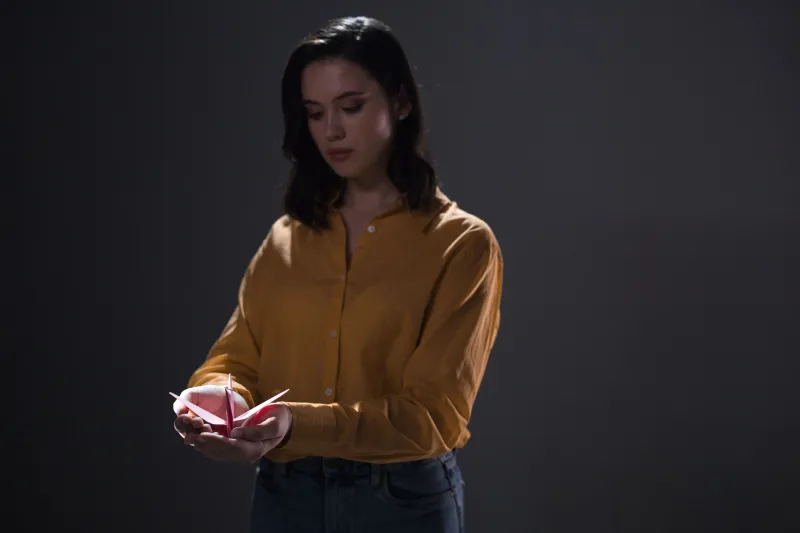
There's something almost too on-the-nose about naming a film Paper Man. Paper tears. Paper crumples. Paper gets wet and falls apart in your hands. But here's the thing about paper that the film quietly, persistently insists upon: it also folds into something beautiful. It holds words. It carries stories. And if you press it the right way, it holds its shape longer than you'd ever expect.
That tension — between delicate and durable — is the engine running underneath Paper Man's entire narrative. It's not just a title. It's a framework. And the more time you spend with the film, the more you start to see how deliberately that metaphor is woven into everything from character psychology to the film's broader commentary on what it means to make art without a safety net.
The Obvious Read (and Why It's Only Half the Story)
On the surface, the "paper" metaphor maps cleanly onto Richard Dunn, our blocked writer protagonist. He's fragile. He's stuck. He's a man who works with words on a page and can't seem to make them mean anything anymore. That reading is right there for the taking, and the film doesn't hide it.
But stopping there undersells what the directors are actually doing. Richard's relationship with paper — with the act of writing, with the blank page, with the imaginary friend who exists partly as a projection of his creative self — is more complicated than simple vulnerability. It's about the cost of being open enough to create in the first place.
To write something real, you have to become something close to paper yourself. You have to be thin enough for light to pass through. That's terrifying. That's also, the film argues, the only way any of this works.
Abby and the Other Side of the Metaphor
If Richard represents the anxiety of the blank page, Abby — the teenage girl he befriends — represents something closer to the resilience of a well-worn notebook. She's been through things. She's marked up and dog-eared and a little torn at the edges. But she's also still holding together, still capable of absorbing something new.
The dynamic between these two characters is where the metaphor really starts to earn its keep. Their friendship is improbable, a little uncomfortable, and completely genuine — and it works precisely because both of them are operating in that strange zone between falling apart and holding on. They recognize it in each other before they can name it.
The film uses their scenes together to make a quiet argument: fragility isn't a flaw to be fixed. It's a shared language. It's how people actually find each other.
Captain Excellent and the Imagination as Load-Bearing Wall
Then there's Captain Excellent, Richard's imaginary superhero companion — played with a kind of effortless charm that could easily tip into self-parody but never quite does. On one level, he's a coping mechanism. A psychological paper crane Richard has been folding and refolding since childhood to keep himself from blowing away entirely.
But Captain Excellent also functions as the film's most direct statement about artistic imagination. He exists because Richard made him exist. He persists because Richard keeps choosing to believe in him. And in that choice — that stubborn, slightly embarrassing, deeply human choice — the film locates something genuinely moving.
Creativity, Paper Man suggests, is an act of sustained vulnerability. You have to keep making the thing even when it makes you look foolish. Especially then, actually.
The Indie Film as Paper Object
Here's where things get a little meta, and honestly, it's one of the more interesting angles you can take into this film.
Paper Man itself is a paper object. It was made on limited resources, by filmmakers betting on a story that didn't fit neatly into any marketable box. It could have been crushed at any point — by festival rejections, by distribution headaches, by the simple market logic that says quiet, character-driven films about middle-aged writers and imaginary superheroes don't sell.
And yet here we are, still talking about it.
The directors seemed to understand, maybe intuitively, that the film's subject matter and the film's existence were telling the same story. A movie about fragility and resilience, made fragile and resilient by the circumstances of its production. That's not an accident. Or if it is, it's the best kind — the kind where the accident turns out to be the whole point.
Why This Metaphor Works When So Many Don't
Films built around central metaphors can go sideways fast. Lean too hard on the symbol and everything starts to feel like an English class assignment. But Paper Man avoids that trap by keeping the metaphor grounded in specific, felt human moments rather than grand symbolic gestures.
Richard doesn't give a speech about paper. Nobody holds up a sheet and talks about what it means. Instead, the metaphor lives in behavior — in the way characters handle their own vulnerability, in the rhythm of conversations that could break at any moment but somehow don't, in the persistent, slightly miraculous fact that the imagination keeps showing up even when it's not welcome.
That's good filmmaking craft. And it's the reason Paper Man rewards multiple viewings in a way that a lot of more overtly ambitious films don't. There's always another layer. Another fold you didn't notice the first time.
The Lasting Impression
Paper is everywhere in this film if you know to look for it. And once you start seeing it, you can't stop. That's the mark of a metaphor that's been genuinely earned rather than simply asserted.
Paper Man understands something that a lot of films miss: the most durable things are often the ones that look like they shouldn't survive. The ones that seem too thin, too quiet, too strange to make it through. The ones that, against all reasonable expectation, hold their shape.
That's the film. That's its characters. And if you've spent any time in the indie filmmaking world, you know that's the story of almost every movie worth caring about.


