From Bedroom Scripts to Big Feelings: How Paper Man Lit a Fire Under a New Wave of DIY Directors
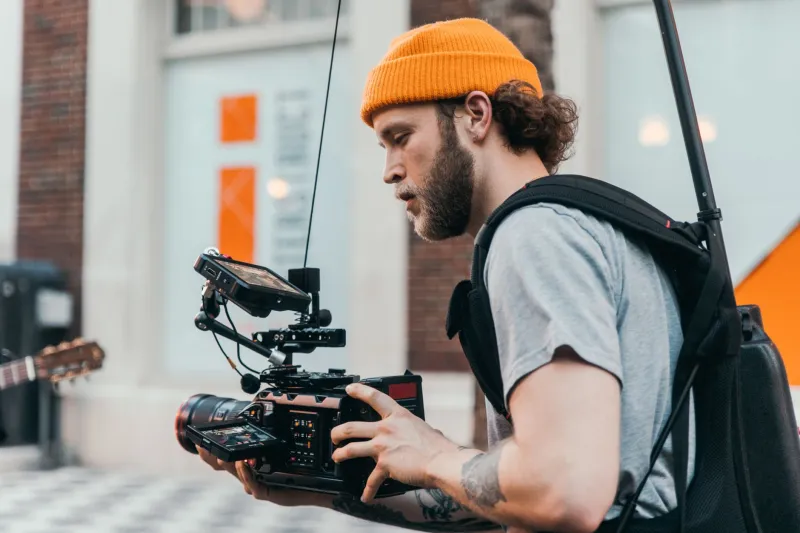
There's a particular kind of creative paralysis that hits a lot of aspiring filmmakers right around the time they start doing the math. Camera rentals. Location fees. Cast. Crew. Post-production. The numbers stack up fast, and for a lot of people — especially those without film school connections or industry parents — the whole thing starts to feel less like a dream and more like a locked door.
Then they watch Paper Man. And something shifts.
It's hard to quantify exactly how many careers that film has quietly nudged into existence, but talk to enough emerging indie directors and a pattern starts to emerge. Paper Man keeps coming up. Not as background noise, but as a genuine turning point — the movie that made them believe that emotional specificity could carry a story further than any production budget ever could.
The Permission Slip Nobody Knew They Needed
Mia Castellano, a 28-year-old filmmaker based out of Austin, Texas, remembers the exact circumstances of her first watch. She was a sophomore in college, halfway through a film studies elective she'd almost dropped, sitting in a dorm room with three other people who were all supposed to be working on something else.
"I didn't expect to feel anything," she says. "I thought indie films were either pretentious or depressing. But Paper Man was neither. It was just... honest. Painfully honest. And I kept thinking, someone made this. A real person made this without a massive machine behind them."
That realization — that the film existed because people willed it into existence rather than because a studio greenlit it — became the seed of her own creative confidence. She shot her first short film the following summer on a borrowed camera and a budget that barely covered craft services. It screened at two regional festivals. She's currently in pre-production on her debut feature.
That trajectory isn't unique. Across the country, in cities and small towns alike, Paper Man has been functioning as something like a permission slip for filmmakers who weren't sure they had the right to try.
What the Film Actually Teaches (Whether It Means To or Not)
Ask any filmmaker what they took away from Paper Man and the answers cluster around a few consistent themes: restraint, character depth, the power of a single strong relationship to anchor an entire narrative.
For Jordan Pryce, a director from Portland, Oregon, who's built a modest following through a string of emotionally raw short films, the lesson was structural. "The film taught me that you don't need plot machinery," he explains. "You need a character who's genuinely lost, and you need to put them somewhere that forces them to confront that. Everything else is just texture."
That's a deceptively simple observation, but it carries enormous practical weight for low-budget filmmakers. Plot machinery is expensive. Chases, set pieces, elaborate twists — these cost money and time and resources that most emerging directors simply don't have. Paper Man demonstrated that a story built around internal conflict and human connection doesn't just survive those constraints — it can actually thrive within them.
The film's visual approach reinforced this. Nothing about Paper Man screams austerity, but nothing about it is wasteful either. Every choice feels intentional, like the filmmakers knew exactly what they had and maximized it without apology. For a generation of DIY directors learning to stretch limited resources, that's a masterclass hiding in plain sight.
The Ripple Effect in the Festival Circuit
It's one thing to be inspired by a film. It's another to see that inspiration show up in the work itself. And increasingly, programmers and critics following the US indie festival circuit are noticing a particular strain of emotionally grounded, character-first filmmaking that owes at least a partial debt to the sensibility Paper Man helped establish.
Small festivals from Tribeca's emerging voices sidebars to regional showcases in the Midwest and Southeast have been quietly programming films that share Paper Man's DNA — intimate in scope, unafraid of quiet moments, anchored by performances that ask a lot of the audience's attention and reward it generously.
Whether those filmmakers all watched Paper Man specifically is almost beside the point. The film contributed to a broader cultural argument that this kind of storytelling deserves to exist and deserves to be seen. It helped shift the conversation about what indie cinema could be in America, and that conversation has consequences.
The Community That Grew Up Around It
Part of what makes Paper Man's influence so durable is that it didn't just inspire individual filmmakers in isolation — it helped build a community. Online spaces dedicated to the film have become informal gathering points for people who share a certain creative philosophy: that authenticity matters more than polish, that emotional truth is a legitimate cinematic goal, that you don't have to wait for someone else's approval to start making things.
That community ethos has real-world effects. Filmmakers who connected over their love of Paper Man have gone on to collaborate, to share resources, to program each other's work. The film functioned, almost accidentally, as a networking hub for a certain kind of indie creative.
Castellano, the Austin-based filmmaker, puts it plainly: "I found my cinematographer through a Paper Man fan forum. We bonded over the same scene. That relationship has been the most important creative partnership of my life so far."
What the Next Chapter Looks Like
The filmmakers who grew up on Paper Man are starting to make real noise. Their work is getting programmed, getting reviewed, getting seen. And as they come into their own, they're carrying forward a set of values that the film helped instill: prioritize the human story, trust the audience, don't let budget define ambition.
That's a legacy that extends well beyond box office numbers or streaming metrics. It lives in the work of people who were moved enough by what they saw to go out and make something of their own.
Paper Man didn't hand anyone a career. But for a generation of DIY filmmakers who needed to believe the path was real before they could walk it, the film did something arguably more valuable. It showed them the door was open — and that someone without a studio safety net had already walked through it.
That's the kind of influence that doesn't show up in any database. But you can feel it, if you know where to look.