The Loudest Silence: How Paper Man's Lead Performance Made Stillness the Most Powerful Move in the Room
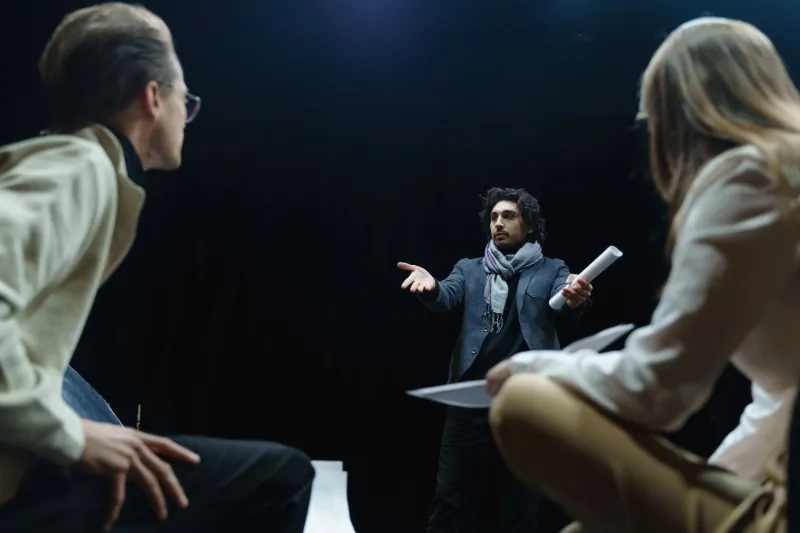
American cinema has a complicated relationship with vulnerability. We tend to dress it up — wrap it in action sequences, bury it under snappy one-liners, or resolve it just fast enough that audiences don't have to sit too long in discomfort. Paper Man refused to play that game. From its earliest frames, the film committed to something genuinely rare: a lead performance built almost entirely on what isn't said, what isn't done, and what quietly falls apart behind someone's eyes when the world isn't looking.
That's a hard thing to pull off. And it's even harder to explain why it works so well.
What "Doing Nothing" Actually Requires
There's a misconception that restrained performances are easier than big, showy ones. Ask any acting coach worth their day rate and they'll tell you the opposite is true. When you strip away the external pyrotechnics — the raised voices, the dramatic exits, the telegraphed emotional beats — you're left with the terrifying task of making an audience feel something through micro-expression, posture, breath, and timing.
The lead in Paper Man understood this assignment completely. What's remarkable about the performance isn't any single scene — it's the cumulative architecture of it. Every choice is load-bearing. A glance held a half-second too long. Shoulders that never quite relax. A laugh that arrives just a beat late, like it had to travel farther than it should have to reach the surface. These aren't accidents. They're a performer working at a level of precision that most blockbuster productions never demand and most audiences never consciously notice — but absolutely feel.
The Stillness That Moves You
One of the most instructive moments in the film comes during a quiet interior scene where the protagonist is alone — no dialogue, no score swelling underneath to tell you how to feel. It's the kind of scene that studio executives historically cut in test screenings because focus groups don't know what to do with it. Paper Man kept it in, and it's one of the most quietly devastating stretches of the entire runtime.
What makes it land is the specificity of the physical stillness. The character isn't frozen in a cinematic, aestheticized way. He's still in the way real people get still when something inside them is working very hard. There's effort in that stillness — controlled, directed effort — and the performance lets you sense it without ever announcing it. That's the paradox at the heart of this kind of acting: the more invisible the technique, the more visible the emotion.
For filmmakers and actors studying craft, this is genuinely instructive material. Restraint isn't subtraction. It's compression. You're not removing the feeling — you're concentrating it until the audience has no choice but to lean forward.
Reframing What "Strength" Looks Like on Screen
American film culture has long equated strength with action. The hero who punches through the problem. The protagonist who outsmarts the antagonist. Even in prestige drama, strength tends to manifest as confrontation — the big speech, the courtroom breakdown, the tearful confession. Paper Man operates in a different register entirely.
Here, the lead character's strength is demonstrated through his capacity to remain present in situations that would send most people running. He doesn't fight. He doesn't flee. He endures, and he feels, and he keeps showing up even when showing up costs him something. That's a kind of heroism that's genuinely underrepresented in mainstream cinema, and the performance honors it by never condescending to it.
There's a scene — and if you've seen the film, you know the one — where the character receives news that reshapes the emotional geography of the entire story. The performance doesn't give you the reaction you've been trained to expect. Instead, it gives you something messier, more honest: a person who doesn't quite know yet how to feel, processing in real time, in front of you. It's uncomfortable in the best possible way. It makes you feel like a witness rather than a viewer.
What This Means for Indie Filmmakers
For independent filmmakers working with limited resources, there's a lesson embedded in this performance that goes beyond acting theory. When your budget won't buy you spectacle, performance becomes your special effect. Paper Man understood this implicitly. The film doesn't compensate for its constraints — it leans into them, building an entire emotional world out of human presence and the charged spaces between words.
This is a model worth studying. Casting decisions matter enormously in indie work, but it's not just about finding someone with the right look or the right credits. It's about finding someone who can carry the weight of a story in their body, without the scaffolding of big moments propping them up. The lead in Paper Man does exactly that, and the result is a performance that feels lived-in rather than performed — which is, ultimately, the highest compliment you can pay.
Directors who are just starting out often make the mistake of over-directing intimate scenes, layering in too many beats, too many instructions. What Paper Man demonstrates — and what its lead performance embodies — is that trust is itself a directorial tool. Trusting the actor. Trusting the audience. Trusting that silence, given enough space, will fill itself with meaning.
Why This Performance Still Matters
We're living through a moment in entertainment where everything is louder, faster, and more maximalist than it was ten years ago. Streaming has raised audience expectations for constant stimulation. Attention spans are a genuine creative consideration now in ways they weren't before. Against that backdrop, Paper Man's central performance feels almost countercultural.
It insists on your patience. It rewards your attention. It treats you as someone capable of meeting a character halfway, of doing some of the emotional work yourself rather than having it all handed to you pre-packaged. That's not a small thing. That's a stance.
For fans of the film, revisiting this performance with fresh eyes is one of the genuine pleasures Paper Man keeps on giving. You catch something new every time — a hesitation, a breath, a moment where the mask slips just slightly before being carefully replaced. It's the kind of work that reveals more the more you bring to it.
And in a universe full of paper-thin characters propped up by spectacle, that kind of depth is worth celebrating loudly — even when it arrives in total silence.