Where It All Came From: Tracing Paper Man's Creative DNA Back to Cinema's Hidden Gems
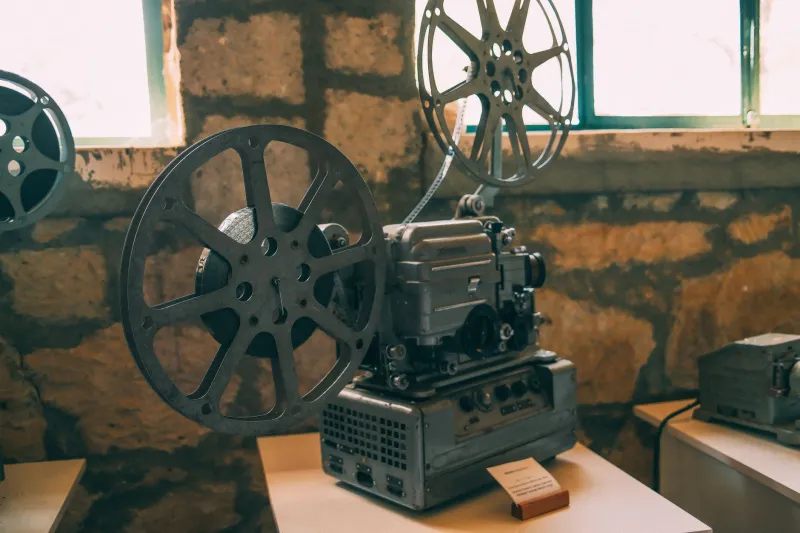
There's a question that serious film lovers tend to ask whenever a movie cuts through the noise the way Paper Man did: where did this come from? Not in a dismissive sense — more like the kind of curiosity you feel when you bite into something unexpectedly delicious and immediately want to know the recipe. Paper Man has that quality. It feels specific. Lived-in. Like it was assembled from references that weren't pulled off a shelf of obvious influences but rather discovered through years of watching, absorbing, and quietly obsessing.
So let's pull that thread. Let's trace the paper trail.
The Quiet American Tradition Nobody Talks About Enough
Before we get to the European stuff — and yes, there's European stuff — it's worth starting closer to home. American independent cinema has a long tradition of small, character-driven stories about adults in emotional freefall, and most of the best ones barely get mentioned in film school syllabi. Think early John Cassavetes, sure, but also think about the quieter, stranger work that followed in his wake.
Filmmakers like Elaine May, whose Mikey and Nicky (1976) remains one of the most emotionally unhinged buddy films ever made, or the early features of Paul Mazursky, who spent the late '60s and '70s making intimate domestic dramas that Hollywood kept trying to turn into something bigger than they needed to be. These are films about people who can't quite get out of their own way — emotionally stunted, funny in the wrong moments, tender when you least expect it. Sound familiar?
Paper Man fits squarely inside that lineage. The film's central dynamic — a blocked writer clinging to a childhood imaginary friend while trying to figure out adulthood — owes something real to that tradition of American cinema that treats emotional immaturity not as a punchline but as the actual subject.
The European Thread: Melancholy With a Sense of Humor
Here's where it gets interesting. If you watch Paper Man with a certain eye, you can feel the presence of filmmakers who probably aren't on most American viewers' radar. The French director Jacques Demy, best known for The Umbrellas of Cherbourg, made films that balanced whimsy and heartbreak in a way that felt almost mathematically precise. There's something of that balance in Paper Man — the way it refuses to let the sad parts be purely sad, or the funny parts be purely funny.
Swedish director Roy Andersson is another name worth throwing into the mix. His trilogy of films — Songs from the Second Floor, You, the Living, and A Pigeon Sat on a Branch Reflecting on Existence — are built around a similar emotional architecture: people who are failing at life in deeply relatable ways, observed with a kind of compassionate absurdism. The imaginary superhero at the center of Paper Man carries that same energy. He's absurd. He's also completely sincere. That's a hard needle to thread, and it's one that filmmakers like Andersson spent careers learning how to do.
The Indie Godparents: Hal Ashby and the Art of Letting Characters Breathe
If there's one American filmmaker whose fingerprints feel most present in Paper Man's DNA, it might be Hal Ashby. Ashby directed Harold and Maude, The Last Detail, Coming Home, and Being There — a run of films in the 1970s that were wildly different in subject matter but shared a consistent philosophy: trust the character, slow down, and let the awkward silences do the work.
Paper Man has that same patience. It doesn't rush to explain its protagonist or tidy up its emotional messiness. It sits with the discomfort in a way that feels distinctly Ashby-esque. For indie filmmakers who haven't spent serious time with Ashby's catalog, Paper Man is practically a gateway drug — watch it, feel something, then go find out why it feels that way. The answer often leads straight back to Hal.
Animation's Influence: When Imagination Becomes Architecture
This one might surprise you, but hear it out. The visual grammar of imaginary characters rendered realistically — present in the same frame as flesh-and-blood people without any winking at the camera — owes a genuine debt to the history of animation and, more specifically, to the way certain animated films have always treated imagination as a physical space rather than a mental abstraction.
Filmmakers who've worked at the intersection of live action and animation — Michel Gondry being the obvious contemporary example — helped establish a visual language that Paper Man quietly borrows from. The idea that a person's inner world could be externalized and treated as architecturally real, not metaphorically real, is something that animated cinema figured out long before live-action indie films caught up. Paper Man caught up.
The Literary Cinema Connection
Paper Man is, at its core, a film about a writer. That's not incidental — it shapes everything about how the story is structured and how the protagonist processes the world around him. And there's a whole subset of cinema devoted to that exact subject: films about the creative process, about writer's block, about the particular kind of self-delusion that creative people are uniquely susceptible to.
Barton Fink is the obvious touchstone, and it's hard to imagine the filmmakers behind Paper Man didn't have it somewhere in their peripheral vision. But lesser-known films like The Squid and the Whale (2005) and even the criminally underappreciated Adaptation (2002) — which lives in a stranger, more self-referential territory — feel like cousins. They share Paper Man's understanding that writers are often their own worst antagonists, and that the most honest stories about creativity are the ones that don't romanticize it.
Why This Genealogy Matters
Here's the thing about tracing influences: it's not about diminishing the original work. Paper Man is its own thing. But understanding where a film comes from deepens your appreciation for what it's actually doing — the choices it makes, the risks it takes, the roads it didn't go down.
For indie filmmakers especially, this kind of excavation is invaluable. Every film in this genealogy was made by someone who was also influenced by something, who also watched obsessively and borrowed thoughtfully and then made something that felt entirely their own. That's the tradition Paper Man belongs to, and it's one of the most alive traditions in cinema.
So if Paper Man moved you — if it stuck around after the credits rolled — do yourself a favor and follow the paper trail. Watch Ashby. Track down some Demy. Sit with Roy Andersson's long, uncomfortable takes. You'll come back to Paper Man with fresh eyes, and it'll be even better the second time around.