Rewritten in the Margins: The Untold Story of How Paper Man's Script Found Its Soul
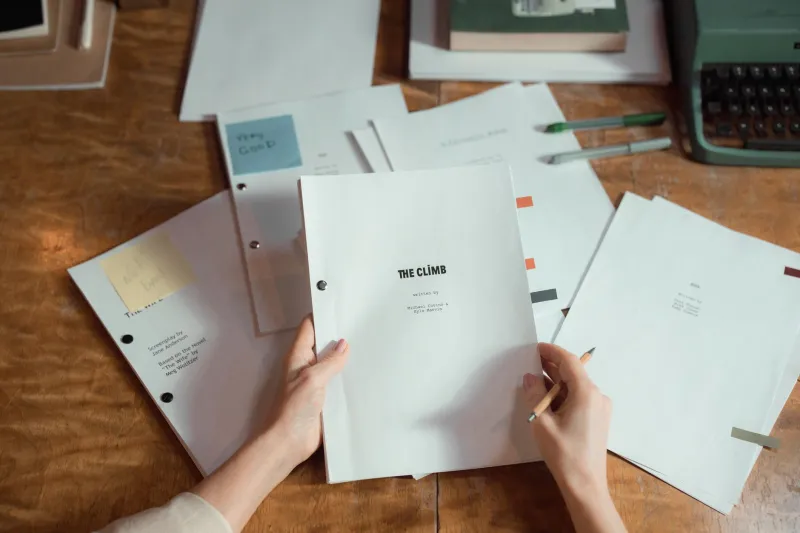
There's a version of Paper Man that nobody ever saw. Actually, there are probably a dozen of them — living in old hard drives, scrawled-over printed drafts, and the memories of everyone who sat in a room arguing about what this story was really trying to say. That invisible archive of discarded scenes and reconsidered choices is, in a lot of ways, just as interesting as the film that made it to the screen.
Screenwriting is inherently an act of subtraction. You start with everything you think the story needs, and then you spend months — sometimes years — figuring out what it can actually survive without. For Paper Man, that process was especially loaded, because the emotional territory the film was navigating demanded a kind of precision that broad strokes simply couldn't deliver.
Where It Began: The Messy, Necessary First Draft
Every screenplay has a first draft that its writers are at least a little embarrassed by in hindsight. The first draft is where you dump everything — every idea, every instinct, every scene you think might work. For Paper Man, early versions of the script reportedly leaned harder into certain comedic beats, letting the quirky premise do more of the heavy lifting than the final film ultimately allowed.
That's not a knock. It's actually how good scripts get built. You explore the broader, more obvious version of your story first, because that's how you locate the quieter, stranger, more honest version hiding underneath it. The comedic scaffolding in early drafts of Paper Man wasn't wasted — it helped the writers understand where the real emotional weight actually lived, which turned out to be in the spaces between the jokes, not in the jokes themselves.
The central relationship at the film's heart — between a blocked writer and an unlikely confidant — went through significant recalibration during development. Early versions apparently gave the dynamic a more overtly whimsical quality, something closer to a conventional quirky-indie setup. What emerged through rewriting was something considerably more raw and specific: a portrait of adult loneliness that didn't soften its edges to make the audience more comfortable.
The Cuts That Hurt (and Why They Were Right)
Ask any screenwriter about their most painful cuts and you'll get a window into what they actually believed about their story. The scenes that get removed aren't always the weak ones — sometimes they're scenes the writers loved deeply but that ultimately pulled focus from what the film needed to be doing.
For Paper Man, several pieces of dialogue that reportedly clarified the protagonist's backstory were eventually stripped out. On the surface, that sounds like a loss. More context, more understanding, right? But the decision to withhold certain explanations ended up being one of the script's defining moves. The film trusts its audience to sit with ambiguity, to fill in the gaps with their own experiences of failure and self-deception. That trust is rare in American cinema, where the instinct is almost always to over-explain.
When you watch Paper Man now and feel that particular ache of recognition — that sense that the film somehow knows something about you that you haven't fully admitted to yourself — you're feeling the result of those cuts. The absence of tidy explanation is what creates the space for the audience to step inside.
Dialogue That Earned Its Place
Not everything got cut, of course. Some lines survived every draft intact because they were doing something irreplaceable — carrying emotional information that couldn't be conveyed any other way, or landing with a specificity that felt almost accidentally perfect.
What's striking about the dialogue that made it into the final film is how rarely it announces itself. There are no big speech moments in Paper Man, no scenes where a character stands up and tells you exactly what the movie is about. Instead, meaning accumulates through small exchanges, through the things characters say when they think they're talking about something else entirely. That's genuinely hard to write and even harder to sustain across a full screenplay.
The rewriting process on Paper Man seems to have been largely about learning to trust indirection. Early drafts may have had characters speak more plainly about their inner lives. The final script understands that people almost never do that — that the most revealing conversations are the ones that appear to be about something mundane.
Scene Architecture: What Moved, What Stayed
Beyond individual lines, the structural evolution of Paper Man's screenplay is worth considering. Where scenes sat in relation to each other — what came before, what followed — shaped the emotional logic of the whole film.
Certain pivotal scenes reportedly shifted position during development, changing meaning simply by virtue of what the audience knew (or didn't know) when they arrived at them. A scene that functions as revelation when it appears early in a script becomes something else entirely when you've relocated it to the third act. Context rewires everything.
The film's pacing — that deliberate, unhurried quality that some first-time viewers find challenging and returning viewers tend to love — is partly a product of structural decisions made during rewrites. The choice to resist conventional dramatic acceleration, to let scenes breathe longer than commercial instincts would typically allow, reflects a confidence in the material that had to be earned through the development process. You don't make that call in the first draft. You make it after you've tried the faster version and watched something essential drain out of it.
What the Final Frame Tells You About the Journey
There's a reason film scholars and serious cinephiles talk about screenwriting as architecture. The finished film is the building, but the script is the blueprint — and unlike actual blueprints, screenplays carry the evidence of every change of mind, every structural second-guess, every moment where the writers had to decide what they actually believed.
Watching Paper Man with this in mind is a different experience. The moments that hit hardest — the ones that send people to forums and fan communities to try to put their reaction into words — aren't accidental. They're the product of a development process that kept asking harder and harder questions of the material until only the truest answers remained.
That's what a well-developed screenplay does. It doesn't just tell a story. It excavates one — digging past the obvious version until it finds something that couldn't have been planned from the outside, something that had to be discovered from within.
The paper trail of Paper Man's script development is, ultimately, the story of a film learning what it needed to be. And the fact that so many audiences have responded to the finished product with something that looks a lot like relief — the relief of seeing something real — suggests the writers followed that trail all the way to the right place.